In today’s fast-paced digital world, businesses cannot afford to rely solely on traditional marketing methods. A strong digital marketing strategy is essential to reach the right audience, build brand awareness, generate leads, and increase revenue. From small startups to large corporations, every business can benefit from a well-planned approach that integrates multiple online channels.
This comprehensive guide will explain what a digital marketing strategy is, why it is crucial, how to create one, and tips for optimizing your campaigns for maximum results.
What is a Digital Marketing Strategy?
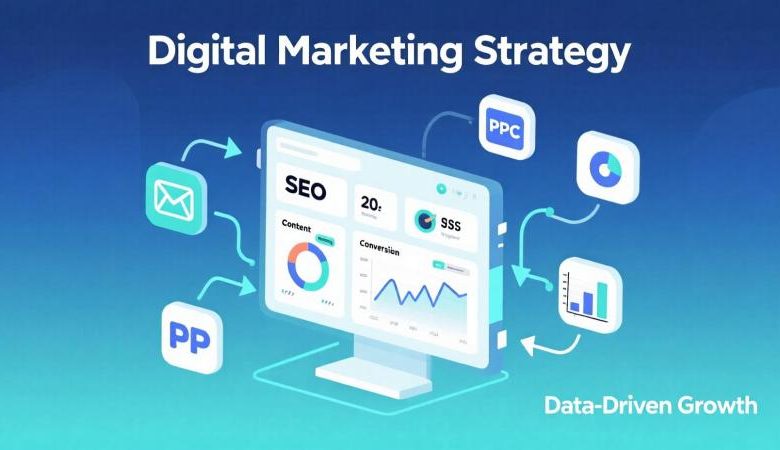
A digital marketing strategy is a detailed plan that outlines how a business will use online channels to achieve specific marketing objectives. It is a roadmap that guides your marketing efforts across platforms such as search engines, social media, email, content, and paid advertising.
Unlike ad hoc campaigns, a strategy ensures all marketing activities are aligned with business goals, audience needs, and performance metrics.
Key components include:
-
Clear marketing goals and objectives
-
Target audience analysis and segmentation
-
Channel selection and integration
-
Content creation and distribution plan
-
Performance tracking and analytics
Why a Digital Marketing Strategy is Important
1. Drives Targeted Traffic
A strategy ensures that marketing efforts focus on attracting the right audience to your website or online platforms, increasing the chances of converting visitors into customers.
2. Improves ROI
By planning campaigns and selecting the right channels, you can maximize your marketing budget and achieve better returns on investment.
3. Enhances Brand Awareness
Consistent messaging and multi-channel presence help create a recognizable brand identity and foster trust with your audience.
4. Enables Measurable Results
Digital marketing platforms provide detailed analytics, allowing you to track performance, measure success, and make data-driven decisions.
5. Provides Competitive Advantage
A structured strategy allows you to stay ahead of competitors, respond to market trends, and capitalize on new opportunities.
Steps to Build an Effective Digital Marketing Strategy
Creating a successful digital marketing strategy requires careful planning and execution. Here’s a step-by-step approach:
1. Define Your Goals
Start by defining what you want to achieve. Goals should be SMART: Specific, Measurable, Achievable, Relevant, and Time-bound.
Examples:
-
Increase website traffic by 30% within six months
-
Generate 500 new leads per month through social media campaigns
-
Boost online sales by 25% in the next quarter
2. Understand Your Target Audience
Identify who your ideal customers are and what they need. Consider:
-
Demographics (age, gender, location)
-
Interests and behavior
-
Pain points and challenges
-
Online habits and preferred platforms
Tip: Create buyer personas to guide content creation and marketing campaigns.
3. Analyze Competitors
Study competitors to identify opportunities and gaps in the market:
-
What channels they use
-
Types of content and campaigns
-
Engagement and follower metrics
-
Customer feedback and reviews
Tip: Use insights to differentiate your strategy and provide unique value.
4. Choose the Right Digital Channels
Not all online platforms are suitable for every business. Select channels based on your goals and audience:
-
SEO (Search Engine Optimization): Improve organic visibility on search engines.
-
Content Marketing: Blogs, videos, infographics, and guides to educate and engage users.
-
Social Media Marketing: Facebook, Instagram, LinkedIn, TikTok for engagement and awareness.
-
Email Marketing: Build relationships and nurture leads.
-
Pay-Per-Click (PPC) Advertising: Google Ads, social media ads for targeted campaigns.
-
Affiliate Marketing: Partner with influencers or publishers to promote products.
5. Develop a Content Strategy
Content is the backbone of any digital marketing strategy. Focus on creating content that:
-
Educates, entertains, or solves problems for your audience
-
Aligns with your brand voice and messaging
-
Is optimized for SEO and social sharing
-
Follows a consistent posting schedule
Tip: Use a content calendar to plan campaigns, posts, and promotions in advance.
6. Plan Campaigns and Promotions
Strategic campaigns help achieve specific goals, such as product launches, seasonal sales, or lead generation.
-
Define the objective of each campaign
-
Select appropriate channels and audience segments
-
Create compelling visuals and copy
-
Schedule and automate posts where possible
-
Monitor performance and adjust in real-time
7. Track, Measure, and Optimize
Use analytics tools to measure the effectiveness of your strategy:
-
Website traffic and behavior (Google Analytics)
-
Social media engagement (likes, shares, comments)
-
Email open rates and click-through rates
-
Conversion rate and ROI
-
Customer acquisition and retention metrics
Tip: Regularly review metrics to identify high-performing campaigns and areas for improvement.
Best Practices for a Digital Marketing Strategy
-
Consistency is Key: Maintain a regular posting schedule and consistent messaging across platforms.
-
Focus on Quality Content: Provide valuable, informative, and visually appealing content.
-
Leverage Multiple Channels: Use a mix of organic and paid strategies for maximum impact.
-
Engage Your Audience: Respond to comments, messages, and feedback promptly.
-
Test and Experiment: Continuously test different strategies, content types, and ad formats.
-
Use Marketing Automation: Streamline repetitive tasks and improve efficiency.
-
Stay Updated: Keep up with trends, algorithm changes, and new tools to maintain competitiveness.
Common Mistakes to Avoid
-
Failing to define clear goals
-
Ignoring audience research
-
Overlooking analytics and performance tracking
-
Posting inconsistent or irrelevant content
-
Relying on a single channel for traffic and sales
Examples of Successful Digital Marketing Strategies
-
Coca-Cola: Combines social media campaigns, influencer partnerships, and seasonal promotions to maintain a global presence.
-
HubSpot: Uses content marketing, SEO, email campaigns, and social media to educate customers and generate leads.
-
Nike: Integrates social media, video marketing, influencer collaborations, and e-commerce promotions for maximum engagement.
These examples demonstrate how a comprehensive digital marketing strategy can drive brand growth, engagement, and revenue.
Tools to Support Your Digital Marketing Strategy
-
Google Analytics: Track website traffic and user behavior
-
Hootsuite/Buffer: Schedule and manage social media posts
-
Canva: Create graphics, videos, and visual content
-
SEMRush/Ahrefs: Keyword research and SEO analytics
-
Mailchimp/ConvertKit: Email marketing automation
-
BuzzSumo: Analyze trending content and competitor performance
Conclusion
A well-structured digital marketing strategy is essential for any business seeking success in the online world. By defining goals, understanding your audience, selecting the right channels, creating high-quality content, and continuously analyzing performance, you can build a robust online presence that drives traffic, leads, and sales.
Digital marketing is not just about posting content; it is a long-term approach that requires planning, creativity, and consistent effort. Businesses that invest in a strategic approach can achieve measurable results, stay ahead of competitors, and ensure sustainable growth in the ever-evolving digital landscape.